Quote of the Week

"Good family life is never an accident but always an achievement by those who share it." - James H.S. Bossard

Wednesday, April 30, 2014

Discipline: It's Necessary

When I hear the word "discipline" I automatically think of "teaching." If I am disciplining one of my cousins or nieces I am teaching them what kind of behavior I expect from them, and what kind of behavior I will not tolerate. However I have recently discovered that not everyone thinks this way. Some people hear the word "discipline" and automatically think of punishment thus causing parents to actually give up on the idea of discipling their children which is actually detrimental to their growth and development. Hopefully after reading this post people will understand how discipline helps children and how they can discipline their children in their own way.


What Is Discipline?

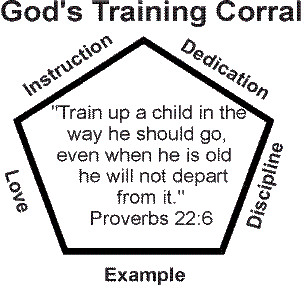
This is not meant to force religion on anyone I just like the message
Discipline is about guidance and keeping children safe as they find out about the world around them. Discipline is also important for children to learn the values of their family and what is expected of them. Through discipline children learn what type of behavior is acceptable and what type of behavior is unacceptable. Although many of us were subjected to it when we were younger "discipline" does not necessarily mean "physical punishment" but it does include both punishment and rewards. It's actually very straightforward, yet there are still parents who do not know how to effectively discipline their children.


Punishment

Punishment is often thought of as a physical act and this is the aspect that causes some people to view discipline in a negative light. What these people do not understand is that although some people do allow the occasional spankings or popping (which is not wrong) this is not the only way to punish your children. Some non-physical ways to punish children include:


Rewards

Giving children rewards are a big part of effectively disciplining your children, it's actually more effective than punishments alone. However this does not mean you have to go out a buy something for your child every time they do something good. In fact, that is actually discouraged, you don't want to end up with a spoiled brat (YIKES!) Some of the different types of rewards include:
  • Praise
    • Tell your child what a good job they have done and give them lots of hugs and kisses. Kids respond positively to this because it actually makes them happy and makes them want to please you more.
  • Toys
    • You can either let them pick out a toy of their choice at the store, or give them a toy that you might have previously confiscated. Or, for those parents who rotate their children's toys, you can bring out a toy that they haven't seen in awhile.
  • Treats
    • Let's be real what child is upset when they're given sweets.
  • Special Activities
    • Allow your child to watch a movie of their choice and stay up a little later than usual. Maybe take them on a special trip, it doesn't have to be anywhere fancy, you can just go to the park down the street.
  • Charts
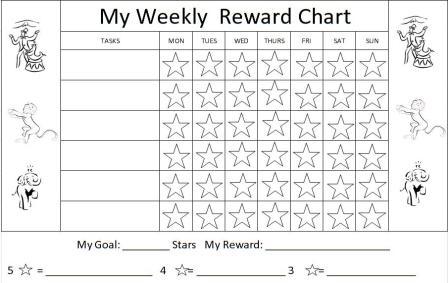
    • Some parents like to implement reward or point charts. After a child does something good they get a star, sticker, patch, etc. put on a chart that is in plain view. Once they receive a pre-selected amount they get some kind of reward. (This can also work for punishments. If they do something wrong the star gets removed from their chart and they lose a privilege. This is a great method for parents with multiple children usually ages 5 and up.)

Different Types of Parents

Parents

It's important for parents to understand that their children will mess up and do something wrong. Children are naturally curious so it's apart of their nature to get into things and unfortunately it's usually things we would prefer them to leave alone. It is a parent's job to correct the negative behaviors and in order to to do this you must first understand what kind of parent you are and what kind of child you have. To figure out what kind of parent you are and how to correct it click HERE. To figure out what type of child you have and the best way to discipline him/here click HERE. You may also find it helpful to discipline children based on their age, more information on that can be found HERE and HERE. 
For a little fun try this Baby Personality Quiz.

Tuesday, April 8, 2014

Nature vs. Nurture: How Are Humans Shaped?

Nature vs. Nurture is a debate within psychology concerned with whether heredity or the environment is the main component in shaping psychological development. This debate has been ongoing for many years, even as early as the 1960s. Back in the 60s it was strongly believed that nurture could over power nature when it came to influencing personality. An example of this is the life story of David Reimer, a young man who was born male but was raised as female after a circumcision operation went terribly wrong. John Money was the psychologist that oversaw Reimer's progress as he made the transition from male to female. Money was so obsessed with trying to prove that nurture could overpower nature that he ignored all the signs that proved Reimer, no matter how feminine he was forced to act, had indeed felt that he was always meant to be a boy. Nowadays the nature side is starting to gain more attention and become more relevant. This is due to the fact that scientists are starting to find genes that influence virtually every behavior.

To read more about David Reimer's life click HERE.

The Nature Theory

We all know that encoded within our DNA there are different genetic traits such as height, eye color, skin pigment, and hair texture, but when it comes to the nature theory it goes a little further than this. The nature theory believes that traits like intelligence, personality, aggression and sexual orientation are all determined by genetics. If it helps you to better understand this think of the typical saying "boys will be boys". When people say this they are basically agreeing with the idea that nature is more powerful that nurture. These people are saying that even if their sons are raised in a kind and affectionate environment, the boys will still act aggressive because it is encoded in their DNA. Another example of this is if you think that being gay is something that is biologically pre-determined. To look further into this check out Bowlby's Theory of Attachment.

The Nurture Theory

On the opposite side of the spectrum there is the nurture theory. The nurture theory believes that behavioral and personality aspects are learned from people's surrounding environment. It is said that children learn through observation and imitation, and most people who have kids will find that statement hard to deny. Think about how people constantly try to force their children into a gendered specific box. Look at how we influence our daughters and sons by saying things like "Boys don't paint their nails," or "Pretty girls don't play in the mud." Although people don't intentionally try to do it, adults constantly influence their young children. This can even happen before birth. Think of how parents automatically buy pink dresses, baby dolls and Barbies for their daughters. While they buy blue pants, toy cars and dinosaurs for their sons. Parents feel if they raise their sons to be masculine they won't turn out to be gay or overly feminine, they also feel the same way about their daughters. Bandura's Social Learning Theory further tries to explain how a personality is developed through learned behaviors.

Personal Opinion

This blog was originally created for academic purposes and although I have included aspects of my personal life in some of the past posts, I have never fully given my opinion. However, this topic is something I really enjoy reading, learning, and talking about. In my own personal experience, I believe that personality is an even combination of nature and nurture. I have a younger family member who sometimes behaves, in simpler terms, like a little boy despite the fact of having an extremely feminine older sister that she looks up to. She enjoys playing with her boy cousins' toys but at the same time she often begs her older sister to paint her nails and play dress up with her. She prefers to be outside and doesn't mind getting dirty and climbing rocks. Her mom encourages her to do what she enjoys while also reminding her that she is a little girl so she has to get dressed (my aunt is very into fashion and no matter how dirty my little cousin gets, she enjoys to dress her up). Although I am not yet a mother I would hope that when I am one, I can raise my children to enjoy who they are. Whether or not my child decides to behave on the more masculine or feminine side will be completely up to them.